
Seasonal lawn care calendar for Lexington, SC
By Petra Kowalski · Updated 2026-06-24
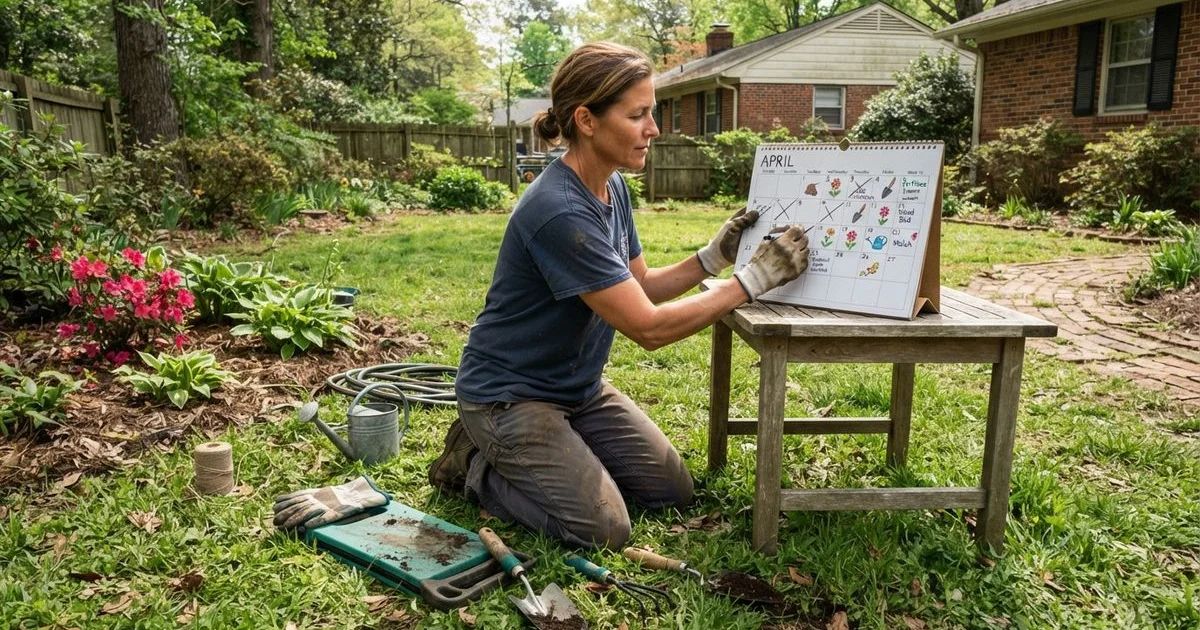
Lexington’s Midlands climate means a long growing season, hot, humid summers, and winters mild enough that dormancy is short but real. Yards here don’t need constant attention year-round, but they do need the right task at the right time. Miss a window, like fall aeration or winterizing irrigation, and you’re often paying more to fix a problem later than you would have spent on routine care.
This calendar walks through what a typical Lexington yard needs each season, so you know what to expect from a maintenance plan or what to schedule yourself if you’re handling parts of it on your own.
Spring (March to May)
Spring is when warm-season lawns wake up and most of the year’s planning happens.
- Green-up and first mows: Start mowing once the lawn is actively growing, keeping the cut height on the higher end early in the season.
- Pre-emergent weed control: Applied before soil temperatures warm enough for summer weeds like crabgrass to germinate, typically in early spring.
- Irrigation startup: Have the system checked for winter damage, heads adjusted, and the controller reprogrammed for the season ahead.
- Mulch refresh and bed cleanup: Beds get their first mulch layer of the year, along with pruning of anything that took winter damage.
Summer (June to August)
This is peak growth and peak heat, which means peak water and mowing demand.
- Weekly mowing: Most lawns need weekly cuts through the hottest months to keep up with growth.
- Deep, infrequent watering: Established lawns generally do better with less frequent, deeper watering than daily light watering, which encourages shallow roots.
- Pest and disease watching: Humidity brings fungal issues and pest pressure; catching a brown patch or grub problem early is far cheaper than a full lawn recovery program later.
- Hardscape and hydration breaks: If you have a crew on-site for other work, summer heat is when scheduling around the hottest part of the day matters most for both plant health and crew safety.
Fall (September to November)
Fall is when a lot of the year’s most important groundwork gets laid, even though growth is visibly slowing.
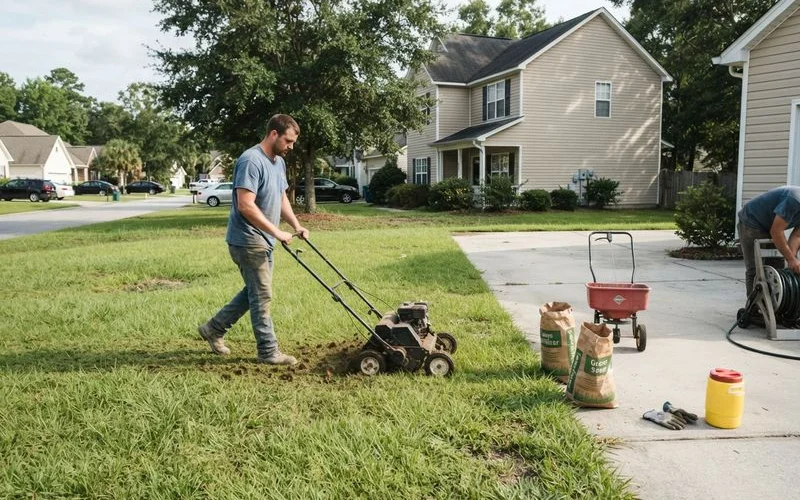
- Aeration and overseeding: Especially important for fescue lawns, which are typically seeded in fall to establish before winter.
- Backflow testing and irrigation winterization: Get the system blown out and any exposed backflow preventer protected before the first hard freeze.
- Leaf cleanup: A thick layer of wet leaves left on the lawn through fall can smother grass and encourage fungal problems.
- Mowing frequency drops: Most yards shift to biweekly as growth slows into late fall.
Winter (December to February)
Warm-season grasses go dormant, but a few tasks still matter.
- Minimal to no mowing: Dormant lawns generally don’t need regular cuts, though an occasional light trim keeps things tidy.
- Tree and shrub pruning: Dormant season is often the best time for structural pruning, since you can see the plant’s shape without leaves in the way.
- Storm prep and cleanup: Winter storms bring down limbs; addressing weak or damaged trees before spring growth resumes is worth the attention.
| Season | Top priority | Skip this and pay for it later |
|---|---|---|
| Spring | Pre-emergent + irrigation startup | Summer weed outbreak |
| Summer | Consistent mowing + deep watering | Heat-stressed, thin turf |
| Fall | Aeration, overseeding, winterizing irrigation | Freeze-cracked backflow preventer |
| Winter | Pruning + storm damage checks | Storm-damaged limbs falling in spring winds |
Building this into a maintenance plan
If you’re hiring a company for ongoing service, ask whether their contract already includes seasonal transitions like aeration, overseeding, and irrigation winterization, or whether those are separate calls you need to schedule yourself. A well-run maintenance plan should shift automatically with the calendar rather than leaving you to remember every seasonal task on your own.
You can compare providers who handle this kind of year-round care in our lawn care & maintenance category, browse the full directory for other service types, and when you’re ready, request quotes from local companies. Our methodology explains how we evaluate and rank the providers listed here.
FAQ
- When should I start mowing in spring in Lexington?
- Once your grass is actively growing and green, usually by mid to late March for warm-season lawns, though a late cold snap can push that back. Mow on the higher end of the recommended height for your grass type early in the season while roots are still waking up.
- When is the best time to aerate a lawn in the Midlands?
- Late spring through early summer for warm-season grasses like Bermuda, centipede, and zoysia, since aerating while they're actively growing helps the lawn recover fast. Fescue lawns are usually aerated in fall instead.
- Do I need to winterize my irrigation system every year?
- Yes, if your system has exposed backflow components. A hard freeze can crack a backflow preventer or pipe that wasn't drained, turning a routine fall task into an expensive spring repair.
- How often should mulch be refreshed?
- Most Lexington beds get a fresh layer once or twice a year, typically spring and sometimes again in fall, both for appearance and to help beds retain moisture through the summer heat.
Related on this site
- Browse lawn care & maintenance providers
- Best lawn care & maintenance in Lexington, SC →
- Lawn mowing pricing: weekly vs biweekly vs monthly in Lexington
- Lawn care in Lexington: when to DIY and when to hire a pro
- Landscaping before you sell your Lexington home
- Storm damage in your yard: safety first, then cleanup
- All guides →