
Storm damage in your yard: safety first, then cleanup
By Petra Kowalski · Updated 2026-07-18
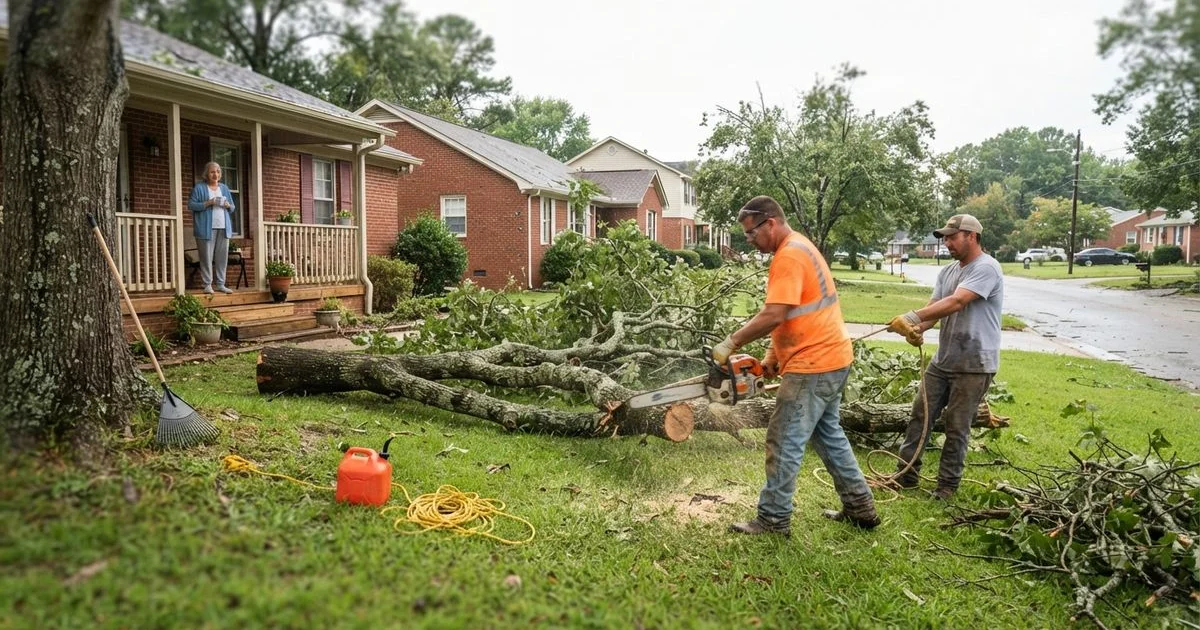
Severe weather in the Lexington area, from summer thunderstorms to the occasional tropical system remnant, can leave a yard with downed limbs, a leaning tree, or damaged fencing in a matter of minutes. The instinct is often to start cleaning up right away, but safety and documentation should come first, before anything gets moved.
Safety first: what to check before you touch anything
- Power lines. Any downed limb touching or near a power line should be treated as live and dangerous until the utility company confirms otherwise. Don’t attempt to move it yourself.
- Leaning or cracked trees. A tree with a new lean, a split trunk, or exposed roots is a real fall risk, even if it looks stable. Keep people and pets away from the area and treat it as unsafe until a professional evaluates it.
- Hanging limbs still in the canopy. These are sometimes called “widowmakers” for a reason. A limb caught partway down can fall without warning, well after the storm has passed.
- Standing water and hidden hazards. Storm debris can hide sharp objects, unstable ground, or washed-out areas that aren’t obvious at a glance.
If any of these apply, it’s not a weekend DIY project. This is where a professional tree service with the right equipment and training matters most.
Document before you clean up
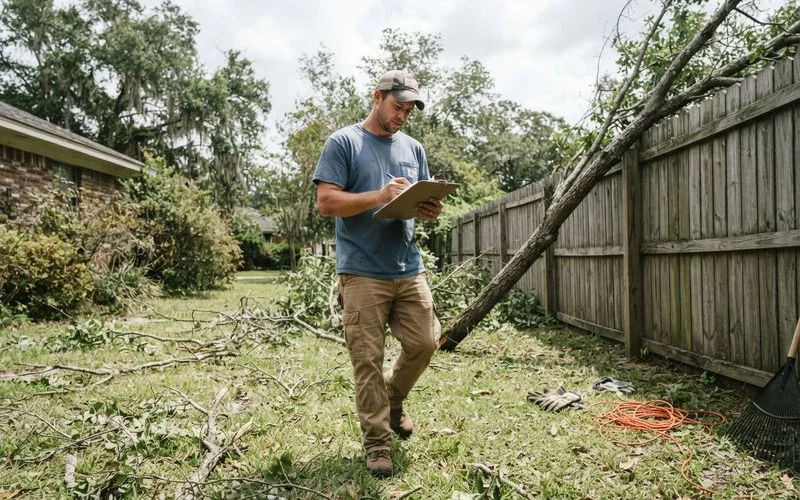
If you’ll need to file an insurance claim, photos and video of the damage as it happened are far more useful than trying to describe it after debris has already been cleared. Walk the property and document:
- The damaged tree, limb, or structure from multiple angles
- Any damage to fencing, structures, or hardscaping caused by falling debris
- The overall scope, especially if multiple areas of the property were affected
Keep these records along with any receipts for cleanup or repair work, since insurers often want documentation of both the damage and the cost to address it.
| Situation | Safe to handle yourself | Call a professional |
|---|---|---|
| Small loose branches on open ground | Yes | — |
| Debris touching or near power lines | No | Yes, and contact the utility company too |
| Leaning tree or split trunk | No | Yes |
| Large limb hanging in the canopy | No | Yes |
| Fence or structure damage from debris | Assess visually, don’t force repairs | Yes, for structural assessment |
After the immediate hazards are addressed
Once anything genuinely dangerous has been flagged and, if needed, professionally assessed, general cleanup, like raking smaller debris or bagging leaves and twigs, is reasonable to handle yourself if you’re up for it. Larger jobs involving trunk sections, stump grinding, or hauling significant debris volume are usually more efficient, and safer, left to a crew with the right equipment.
Reducing risk before the next storm
Once cleanup is done, it’s worth having any trees with a history of dropping large limbs, or ones close to the house, evaluated by an arborist. A tree that survives one storm with visible stress is often a bigger risk in the next one. Building tree health checks into your regular seasonal routine, covered in our seasonal lawn care calendar, helps catch a stressed tree before the next storm turns it into an emergency.
Working with your insurance company
Most homeowners policies cover storm-related tree and debris damage to your home or other structures, though coverage for a fallen tree that didn’t hit anything is often more limited. Call your insurer early, share your documentation, and ask specifically what’s covered before authorizing major cleanup or repair work, since some policies want an adjuster to see the damage before it’s cleared. If a neighbor’s tree fell onto your property, your own policy typically handles the claim regardless of whose tree it was, so don’t wait on a conversation with the neighbor before starting the process.
Coordinating cleanup after a widespread storm
After a major storm event, tree services and cleanup crews across the area get busy fast, and response times stretch out accordingly. If your situation isn’t an emergency, like a tree blocking a driveway or touching a structure, it’s reasonable to expect a short wait for scheduling. Booking early, even for non-urgent cleanup, tends to get you on a crew’s calendar before the backlog grows. For anything urgent, be clear about that when you call so it can be prioritized appropriately.
Browse our full directory of local landscapers and tree service providers, and request quotes once you’re ready to move forward with cleanup or a tree health assessment. Our methodology explains how we evaluate and score the companies listed here.
FAQ
- Is it safe to clear small branches myself after a storm?
- Small, loose branches on the ground away from power lines are generally fine to clear yourself. Anything tangled in or near power lines, or a larger limb under tension, is not a DIY job. When in doubt, leave it and call a professional.
- How do I know if a tree is at risk of falling after storm damage?
- Warning signs include a visible lean that wasn't there before, cracked or split trunk bark, exposed or uprooted roots, and large broken limbs still hanging in the canopy. Any of these warrant keeping people and pets away from the area until a professional assesses it.
- Should I document damage before or after cleanup?
- Before, if at all possible. Photos and video of the damage as it happened make any insurance claim faster and clearer than trying to describe it after debris is already cleared.
- How soon after a storm should I call a tree service?
- For anything urgent, like a tree on a structure or blocking access, right away. For less urgent damage, within a few days is usually fine, though demand for tree services tends to spike after major storms, so earlier calls often get scheduled faster.