
Outdoor lighting and fall-risk safety around your home
By Petra Kowalski · Updated 2026-07-22
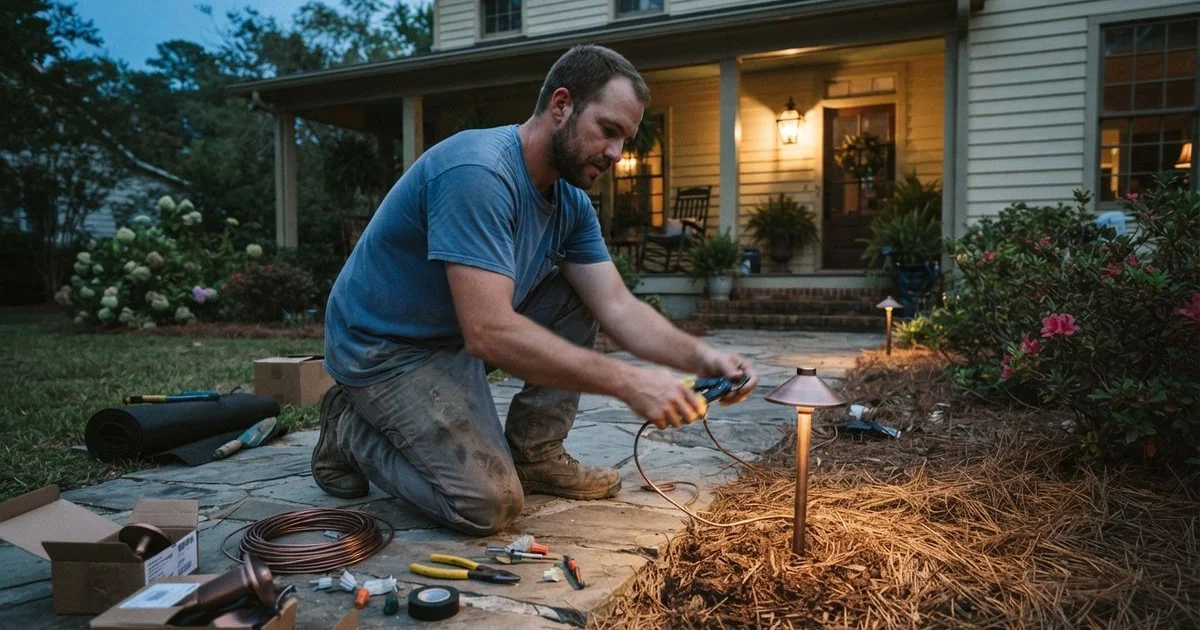
Outdoor lighting often gets framed as a curb-appeal upgrade, but for a lot of households, especially those with older family members, young kids, or anyone with mobility concerns, it’s really a safety fix hiding as a design choice. A dark step or an uneven walkway is a genuine fall risk, and it’s one of the more affordable problems to solve in a yard.
Where falls actually happen
Trips and falls around a home cluster around a predictable set of spots: steps, any change in walkway surface or grade, transitions from a driveway to a walkway, and areas where tree roots or settling have created an uneven surface. These are exactly the places worth lighting first, before spending on lighting that’s purely decorative.
Prioritizing a safety-focused setup
- Steps and stairs. Even a single step is a real risk in low light. Step lights or well-placed path lighting at the base and top of any stairway should be the first priority.
- Walkways with grade changes or uneven surfaces. Anywhere the ground isn’t flat and consistent deserves consistent lighting, not just an accent light every ten feet.
- The transition from driveway to entry. This is a high-traffic area, especially for guests unfamiliar with the property’s layout.
- Areas near mailboxes, trash cans, or anywhere someone might walk after dark for a routine task.
Brightness matters more than style here
Decorative accent lighting is often intentionally soft and low, which works well for ambiance but not for actually seeing where you’re stepping. If the goal is safety, ask an installer specifically about lumen output for step and path fixtures, not just fixture style. A well-designed system can still look attractive while providing enough light to see a step clearly.
| Location | Fall risk | Priority for lighting |
|---|---|---|
| Steps and stairs | High | First |
| Walkways with grade changes | High | First |
| Driveway-to-entry transition | Moderate to high | Second |
| Routine-use paths (mailbox, trash cans) | Moderate | Second |
| Purely decorative accent areas | Low | Last, once safety areas are covered |
DIY versus hiring a professional
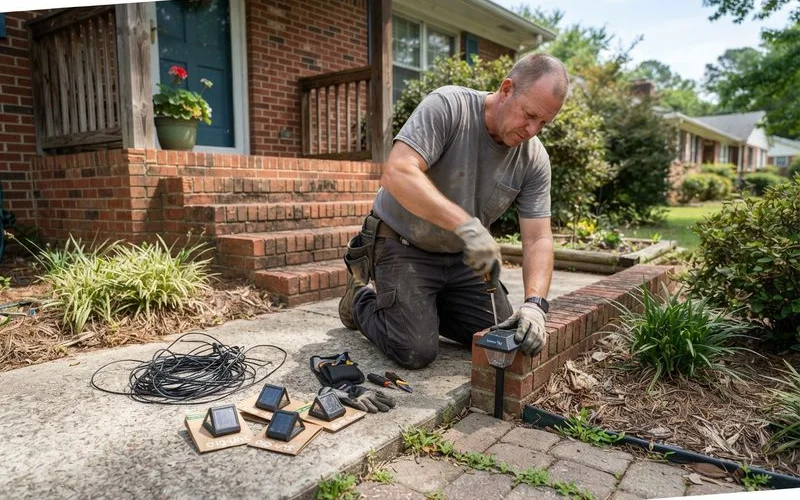
Simple, low-voltage path and step lights are often manageable as a DIY project, especially for a small number of fixtures. Anything requiring new wiring runs, a transformer upgrade, or work near a home’s main electrical panel is worth having a licensed professional handle, both for safety and to make sure the system is reliable over time rather than something that needs frequent troubleshooting.
Keeping fixtures working, not just installed
A safety lighting system only helps if it’s actually working when someone needs it. Bulbs burn out, solar panels get shaded by growing plants, and low-voltage connections can corrode over time in Lexington’s humidity. A quick seasonal check, walking the property after dark a few times a year, catches dead fixtures before they become a problem rather than after someone trips on a step that used to be lit.
Layering lighting for both safety and appeal
A well-planned system doesn’t have to choose between function and looks. Many installers layer bright, functional lighting directly on steps and walkways with softer accent lighting elsewhere in the yard, like uplighting on a tree or a wash of light along a bed. This keeps the highest-risk areas clearly lit while still giving the property a finished, welcoming look after dark rather than looking like a security installation.
Motion sensors as an added layer
For areas that don’t need to stay lit all night, like a side path or a less-used entry, motion-activated fixtures add an extra layer of safety without running lights continuously. They’re particularly useful for anyone who might be walking out to a car late in the evening, since the light comes on right when it’s needed rather than relying on someone to flip a switch in the dark.
Bringing it up with an aging or mobility-limited household member
If safety lighting is being considered because of a parent or family member with mobility concerns, it helps to walk the property together after dark before finalizing a plan. What looks adequately lit to one person can still feel uncertain to someone less steady on their feet, and getting their direct input on where they feel unsure catches problem spots a general safety checklist might miss. Fall risk isn’t the only outdoor safety question worth asking either; our guide on tick, chigger, and poison ivy risks from yard work covers what else to watch for once you’re out in the yard.
To compare local providers who handle this kind of work, see our outdoor & landscape lighting category, or browse the full directory for other service types. Request quotes once you know which areas you want covered first, and see our methodology for how we evaluate and score the companies listed here.
FAQ
- Where should outdoor lighting go first for safety, not just looks?
- Steps, walkways, and any change in grade or surface are the highest-priority spots, since these are where trips and falls most commonly happen after dark. Driveways and entry points come next.
- Is solar lighting bright enough for safety, not just accent lighting?
- Some solar fixtures are, but many are designed more for soft accent lighting than the consistent brightness needed for a safety-focused path or step light. If safety is the priority, ask specifically about lumen output rather than assuming solar covers it.
- How much does a basic safety-focused lighting setup cost?
- It depends heavily on scope, from a few path and step lights to a fuller system covering a whole property. A modest safety-focused setup covering key trip hazards is typically far less than a full decorative landscape lighting package.
- Can I add safety lighting myself, or does it need a professional?
- Simple, low-voltage path lights are often DIY-friendly. Anything requiring new electrical wiring, transformers, or working near a home's main electrical panel is worth having a licensed professional handle.