
Tick, chigger, and poison ivy risks from yard work
By Petra Kowalski · Updated 2026-07-20
This is general information, not medical advice. If you develop a rash, fever, or other symptoms after yard work, contact a doctor.
Lexington’s warm, humid climate and mix of wooded lots and overgrown edges make ticks, chiggers, and poison ivy a real, if usually manageable, part of yard work here. None of these require avoiding the yard altogether, but a few habits make a meaningful difference in how often you deal with the aftermath.
Ticks
Ticks are active across most of the year in the Midlands, not just summer, and they’re most commonly picked up brushing against tall grass, leaf litter, or overgrown edges along a property line. After any yard work, especially anything involving clearing brush or working near wooded areas, do a full-body check, including scalp, behind ears, and waistband, where ticks often go unnoticed. Showering within a couple of hours of yard work also helps wash off ticks that haven’t yet attached.
Chiggers
Chiggers are common in tall grass and shaded, moist areas, and their bites tend to show up as intensely itchy welts, often around ankles, waistbands, or other areas where clothing fits snugly. Tucking pants into socks or boots during yard work in overgrown areas reduces exposure, and a shower with soap soon after helps remove chiggers before they can bite.
Poison ivy
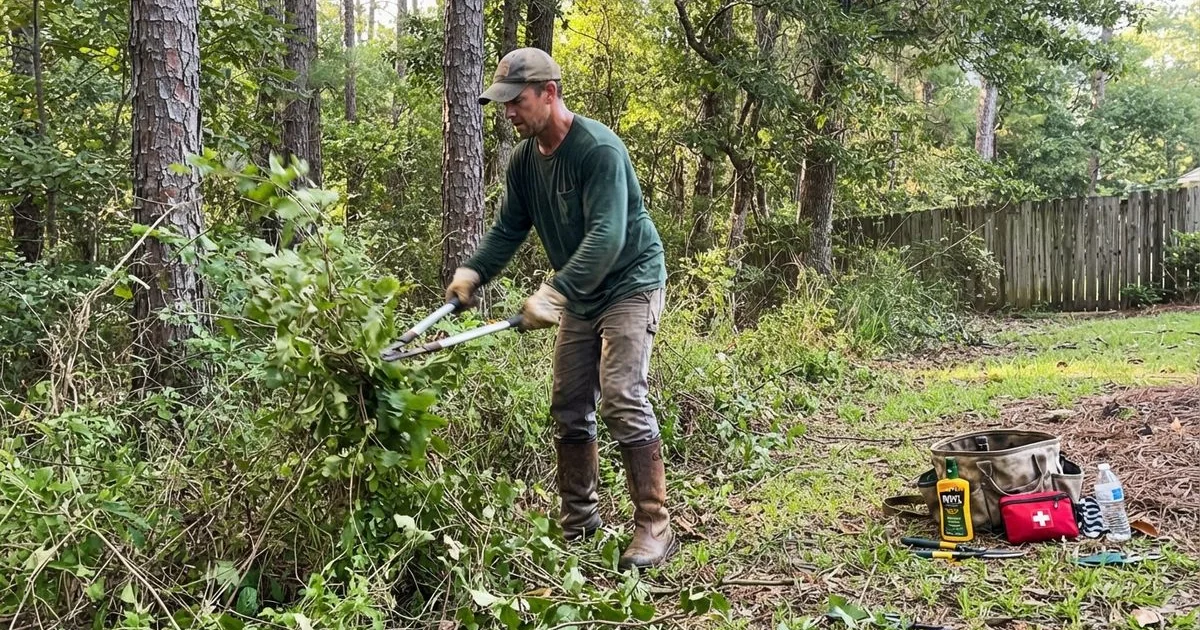
Poison ivy grows commonly along fence lines, tree bases, and untended edges of Lexington yards, and it can appear as a climbing vine, a low shrub, or ground cover depending on the spot. The oil responsible for the rash, urushiol, stays active on tools, gloves, and clothing until washed, so it’s possible to get a reaction well after actually touching the plant if you handle contaminated gear. If you’re clearing an area with suspected poison ivy, long sleeves, gloves, and washing tools and clothes afterward all reduce risk meaningfully.
| Hazard | Where it’s common in yards | Best prevention |
|---|---|---|
| Ticks | Tall grass, leaf litter, wooded edges | Full-body check, shower soon after |
| Chiggers | Tall grass, shaded moist areas | Tuck pants into socks, shower after |
| Poison ivy | Fence lines, tree bases, untended edges | Long sleeves/gloves, wash tools and clothes |
When it’s worth having a professional clear an area
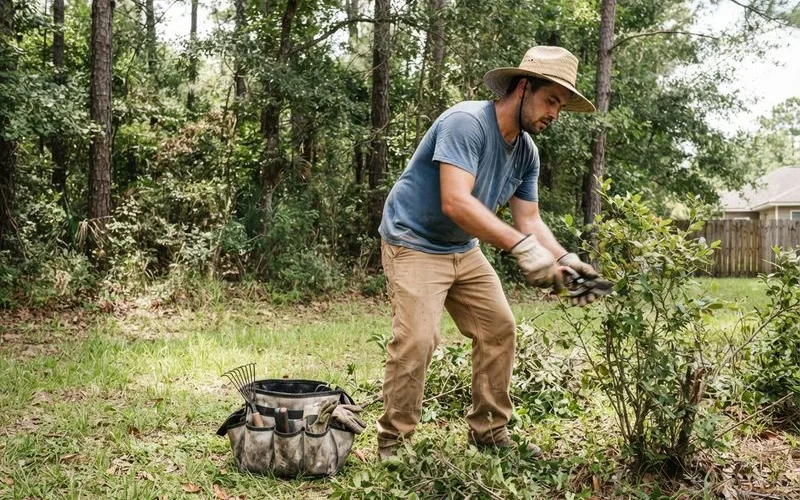
If a section of your yard is heavily overgrown, bordered by woods, or has a known poison ivy patch you’d rather not tackle yourself, a landscaping crew with the right protective gear and experience identifying these hazards can clear it more safely than most homeowners can on their own. This is a reasonable task to hand off, especially for larger areas or if anyone in the household has a known sensitivity to poison ivy or a history of tick-borne illness.
Keeping the risk down between visits
Regular mowing and trimming actually does double duty here. Keeping grass cut short and clearing brush along fence lines and property edges reduces the humid, shaded conditions ticks and chiggers prefer, and it makes it easier to spot poison ivy before it spreads. A yard that’s maintained on a consistent schedule tends to have noticeably fewer of these problems than one that gets attention only occasionally, since overgrowth gives all three hazards more room to establish.
A note for pets and pet owners
Pets that spend time in the yard, especially near wooded edges or tall grass, pick up ticks easily and can carry them into the house. A regular tick-check routine after outdoor time, combined with a vet-recommended prevention product, catches most issues before they become a problem for the pet or the household. If your yard borders undeveloped land, this is worth treating as a standing habit rather than an occasional afterthought. If your household also has questions about lawn chemical safety around kids and pets, our guide on lawn chemical and pesticide safety for kids and pets covers that separately.
Browse our full directory of local landscapers for help with overgrown or hard-to-manage areas, and request quotes to compare providers. Our methodology explains how we evaluate and score the companies listed here.
FAQ
- When is tick season in South Carolina?
- Ticks are active for most of the year in the Midlands, with the highest activity typically in warmer months, but they can be encountered any time temperatures stay mild. Check for ticks after yard work regardless of season.
- How do I tell poison ivy apart from harmless vines?
- The old saying 'leaves of three, let it be' is a reasonable starting point, but poison ivy can look different depending on the season and whether it's climbing or growing along the ground. If you're not sure, avoid handling it bare-handed and treat it as poison ivy until confirmed otherwise.
- What should I do if I think I've been exposed to poison ivy?
- Wash the area with soap and water as soon as possible, since the oil that causes the reaction can be removed if caught early. If a rash develops or you're unsure, contact a doctor, especially if it's widespread or near your eyes or face.
- Do I need to check pets for ticks after they're in the yard too?
- Yes. Pets pick up ticks easily and can bring them closer to the house. Check pets after time outdoors, especially if your yard borders wooded or overgrown areas, and talk to your vet about tick prevention.