
Lawn chemical and pesticide safety for kids and pets
By Petra Kowalski · Updated 2026-07-10
This is general information, not medical or veterinary advice. If you have specific health concerns about a chemical exposure, contact a doctor, poison control, or a veterinarian directly.
Fertilization and weed control programs are common in Lexington, and most are applied safely with no issue for families and pets. Still, it’s worth knowing the basic safety practices so you’re not guessing on treatment day, especially with kids and pets who spend a lot of time directly on the lawn.
The label sets the real timeline
Every pesticide or fertilizer product carries a label with specific reentry guidance, meaning how long to wait before people or pets should be on the treated area again. This isn’t a general rule of thumb, it’s specific to the product and its formulation. If a lawn care company applies a treatment, ask directly what the reentry interval is for that specific product rather than assuming a standard wait time applies across all treatments.
Practical steps on treatment day
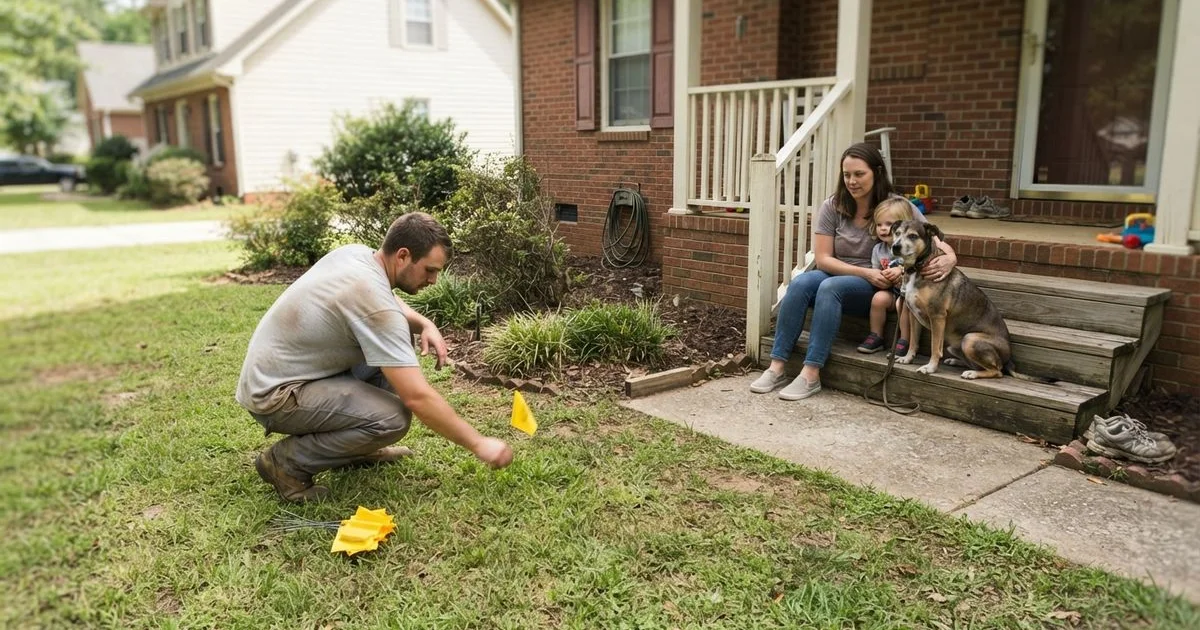
- Keep kids and pets off the lawn until the product has dried or the labeled reentry period has passed, whichever the label specifies.
- Ask for advance notice of treatment days so you can plan around outdoor time, especially for young kids or pets that are outside frequently.
- Store any leftover homeowner-applied product away from where kids or pets can reach it, in its original labeled container.
- Rinse paws and skin if a pet does get onto a freshly treated area before the reentry period has passed, and watch for any signs of irritation.
- Keep toys and water bowls off the lawn on and immediately after treatment days, since pets often chew or drink from these.
Talking to your lawn care provider
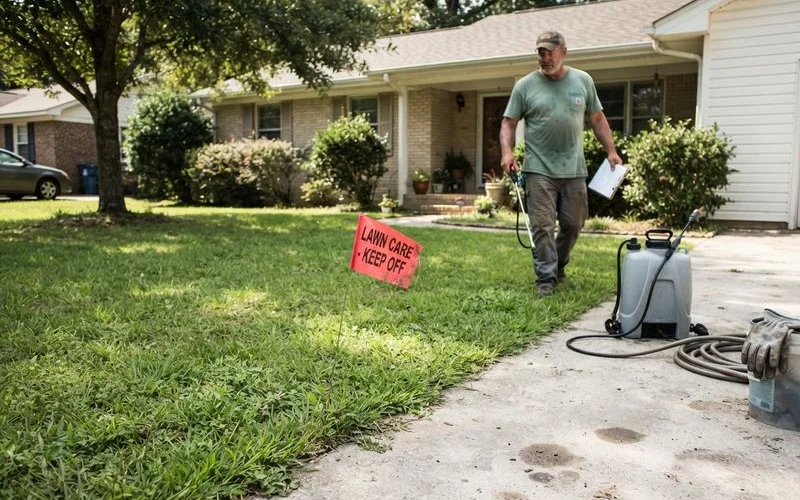
A good provider should be able to tell you, without hesitation, what products they use, the reentry interval for each, and whether they offer signage or notification so your household knows when it’s safe to go back out. If a company is vague or dismissive about these questions, that’s worth factoring into your decision.
Setting up a routine around treatment days
If you’re on a recurring fertilization or weed control program, it helps to build a simple household routine around it rather than relying on memory each time. Ask the company to notify you a day ahead by text or email, mark the date on a shared calendar, and keep a leash or a fenced area ready for pets on treatment mornings so you’re not scrambling once the crew arrives. Small, consistent habits like this do more to prevent accidental exposure than any single precaution on its own.
What to keep an eye on afterward
Even with reasonable precautions, it’s worth watching for signs that something didn’t go as expected, like unusual drooling, itching, or lethargy in a pet, or skin irritation in a family member who spent time in the yard shortly after treatment. Most reactions, if they happen at all, are mild and short-lived, but knowing what to watch for means you can act quickly rather than second-guessing whether something is actually related to a treatment.
| Question to ask | Why it matters |
|---|---|
| What product is being applied? | Reentry timing and toxicity vary by product |
| What’s the reentry interval? | Tells you exactly how long to keep kids/pets off the lawn |
| Do you provide treatment-day notice or signage? | Lets you plan around outdoor time without guessing |
| Is this a general-use or restricted-use product? | Restricted-use products carry stricter handling requirements |
If you’d rather avoid synthetic products
Some households prefer to sidestep the question altogether by choosing organic or reduced-chemical lawn care. Even then, it’s worth asking what’s actually in an “organic” program, since minimum-risk products still deserve the same basic safety questions. Our eco-friendly & organic lawn care category lists local providers who focus on this approach.
Whichever direction fits your household, request quotes from local providers to compare their products and practices directly, or browse the full directory of Lexington landscapers. Our methodology explains how we evaluate and score the companies listed here.
FAQ
- How long should kids and pets stay off a treated lawn?
- This varies by product, and the label is the actual source of truth here, not general advice. Some treatments are safe once dry, while others specify a longer reentry period. Always check the specific product label or ask your lawn care company directly.
- How will I know when it's safe to let pets back on the lawn?
- Ask your provider for the reentry interval for the specific product used, and consider requesting visible signage or a text notification on treatment days so you don't have to remember the timing yourself.
- Are organic lawn treatments automatically safer for pets?
- Not necessarily. Some organic and minimum-risk products still carry reentry guidance, and pets can have reactions to natural products too. Ask what's specifically in any treatment, organic or not, rather than assuming the label alone tells the full story.
- What symptoms in a pet might mean chemical exposure?
- Vomiting, drooling, lethargy, or skin irritation after being on a treated lawn are worth a call to your vet. If you're at all concerned, contact a veterinarian rather than waiting to see if symptoms pass.